-
The View from Here
Meet the Gallatin County Attorney Candidates

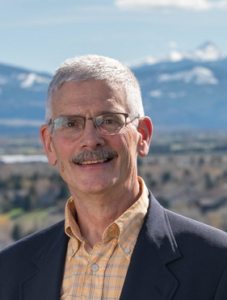
The County Attorney wields substantial power, including discretion over law enforcement priorities, what criminal cases are prosecuted, dismissed, or never pursued, bail decisions, and much more. Yet this position receives little media attention and most voters end up voting based merely on party affiliation, with little knowledge of the position and distinctions among candidates.
Hear directly from candidate Audrey Cromwell and incumbent Marty Lambert (in separate interviews of ~40 minutes each) about their ideas of justice and what role they envision for the office.
Wildfire, Land Management, and the Future of the West
George Wuerthner has authored more than thirty books on natural history and other topics, including “Wildfire: A Century of Failed Forest Policy” and The Energy Reader. George writes often for The Wildlife News, among many other publications, and also is a professional photographer and guide.
Join us as we explore the factors behind our increasingly fire-prone summers, ideas for improving our stewardship of public lands, and common misperceptions about causes of wildfire and our capacity to control it.
-
Forthright Radio
Held v MT Day 5 Dr. Lise Van Susteren & Lander Busse
We have been recording and producing daily audio digests of the historic Held v State of Montana trial, brought by 16 youth plaintiffs asserting that their constitutional rights are being violated by the State of Montana, which began on June 12, 2023, in the Lewis and Clarke County District Court in Helena, MT, Judge Cathy Seeley presiding.
We share the testimony from June 16, 2023, of the final two witnesses for the plaintiffs, Dr. Lise Van Susteren, an internationally recognized Psychiatrist and expert on how climate change affects the physical and mental health of youth differently and more drastically than adults.

We end with the final words of the plaintiffs’ case given by youth plaintiff, Lander Busse, after which the Plaintiffs rested their case.
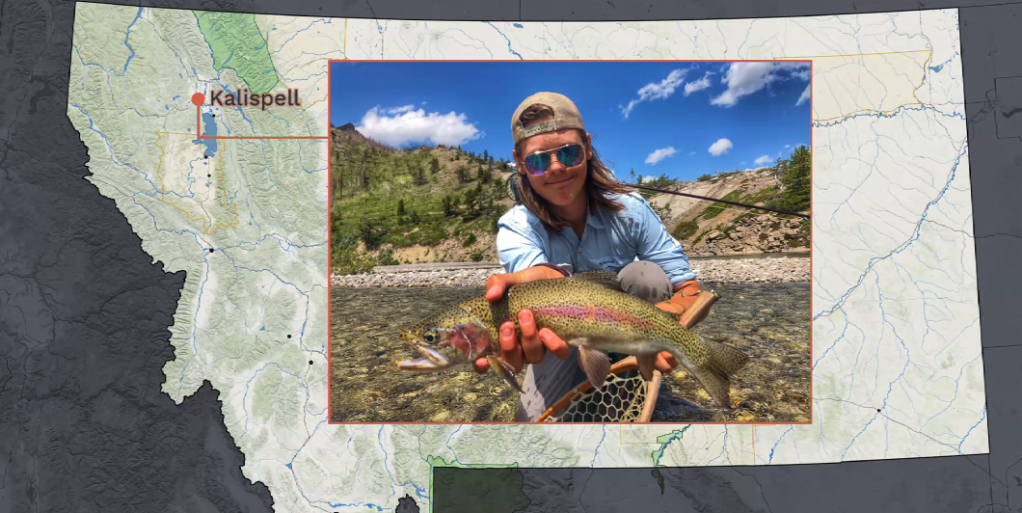
We will continue to record and produce these daily audio digests of the Held v State of Montana trial as it continues on July 19, 2023 as the Defense presents their case with witnesses Terry Anderson, Christopher Dorrington and Sonja Nowakowski.
Eric Bendick: Path of the Panther
On April 20, 2023 The Bozeman Doc Series and Gallatin Valley Earth Day present the award winning, new documentary from Bozeman based Grizzly Creek Films and director, Eric Bendick, PATH OF THE PANTHER.
Drawn in by the haunting specter of the Florida panther, it follows a wildlife photographer, veterinarians, ranchers, conservationists, and indigenous people, who find themselves on the front lines of an accelerating battle between the forces of renewal and the forces of destruction that have pushed the Everglades to the brink of ecological collapse.
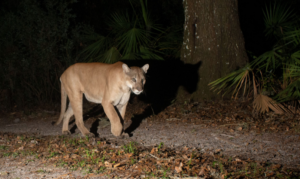
Once ubiquitous in North and South America, but now perched on the edge of extinction, this perilously small, sole remaining population of the panther east of the Mississippi is an emblem of our once connected world. A vision of what could be again.
We spoke with the Emmy Award winning director of Path of the Panther, Eric Bendick, about his work and this powerful new film, Path of the Panther.You can find out more by going to https://www.gallatinvalleyearthday.org/ or http://www.bozemandocseries.org
-
Body Politic
SK Rossi – Senate Bill 458
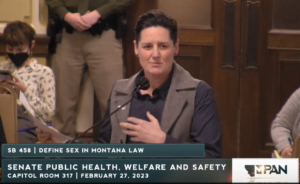
In this episode Siobhan interviews SK Rossi from Central House Strategies about Montana Senate Bill 458, which is likely the broadest and most destructive anti-transgender bill in the nation so far. Rossi breaks down the bill’s exact and extensive harm and offers some words of encouragement for those who continue to fight for this beleaguered minority.
What’s Right with Drag
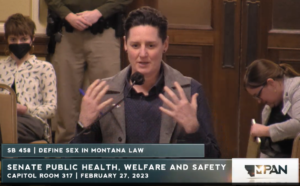
Let’s talk about What is so Right with Drag. On this episode of “Body Politic”, Donald Stuker aka Hexx Shadow takes us through Montana’s illustrious drag history, purpose, and the incredible social benefit that drag grants to our community at large. We also touch on current legislative threats to this art, the artists, and all those benefit from them.
Hexx has been performing in drag in Montana for over a decade – she produces and performs in shows all over Montana and the Pacific Northwest – she hopes to see drag and gender expressive performance art spread to all cities in Montana, and continues to work tirelessly along side many of the phenomenal performers of the state to make that a reality. (Photo Credits: Mary Williams, Photography by Mary Williams)


-
Spirit of the Valley
Spirit of Love: Alexis Brill, mother and widow
This month’s guest is Alexis Brill. Alexis is a 37 year old widow and solo parent to her 2.5 year old daughter, Melanie. Alexis lost the love of her life, Andrew Matney, on July 28, 2019 after a brave six year journey with colon cancer. Through her grief, Alexis is realizing the fragility of life and is rebuilding after experiencing a profound loss and even a loss of identity. Alexis believes in living life courageously and fully. Self love and self compassion guide her through her darkest days. Alexis grew up in Billings, MT and has been in Bozeman since 2014. She is a realtor for Berkshire Hathaway HomeServices, and can be reached at brillalexis@gmail.com. She especially appreciates hearing from solo parents and other widows / widowers.

Spirit of Spirits: Shaun Phoenix, Shamanic Practitioner
Shaun Phoenix, LCPC, has been a psychotherapist for more than 26 years, a shamanic healing practitioner, teacher and mentor for more than 30, and has created and led a vast array of women’s spirituality gatherings and retreats over the years. She is passionate about creating sacred space in which people can discover and cultivate their own relationship with the Divine as they experience it. This work includes crafting unique rituals and ceremonies, and Shaun has facilitated many weddings, baby blessings, house blessings, and other initiatory rites for individuals, families and communities.
Shaun is also half of Many Hands Light Work along with her wife, Stormi Oshun. MHLW builds upon the theme of “sacred play” and brings drumming, music, and creative exploration to communities near and far. Adding to the fun, Shaun is a member of Yamama!, an all-woman World Music and Dance ensemble which brings music from cultures around the world alive with song, drum and dance.
When not working, Shaun finds renewal on the beautiful mountain trails, in her glorious gardens, and by reading, writing, and making a joyful noise with her guitar, piano and drum (usually not all at the same time).
You can find Shaun at www.safepassagecounseling.com
-
Wilderness and Wildlife
Ryan Trimbath – Cuyahoga Valley National Park
Jay is joined by Ryan Trimbath, a Biologist at Cuyahoga Valley National Park where he has worked for the last eight years. Prior to working for the NPS, Ryan got a degree in Wildlife & Conservation Biology from Ohio University (2007) then traveled around the country working as a field biologist on various research projects. During this time, he honed his skills as a field biologist and pursued his interests in forest and avian ecology. Ryan has the honor of being the only Ornithologist to ever hold a living Northern Parula x Cerulean Warbler hybrid which he discovered at Deep Lock Quarry in 2014, with a second bird found at Oak Hill in 2015. You can read more about this discovery in the Wilson Journal of Ornithology “Evidence for hybridization between Northern Parula (Setophaga americana) and Cerulean warbler (S. cerulea)” (Trimbath et al. 2019).
This is a two-part interview.
Jihadda Govan – Sand to Snow National Monument
Jay interviews Jihadda Govan, the Monument Manager of Sand to Snow National Monument in Southern California which encompasses 154,000 acres and is co-managed by the Bureau of Land Management (83,000 acres) and U.S. Forest Service (71,000 acres). Jihadda holds a bachelor’s degree from California Polytechnic University, Humboldt, where she studied wildlife management with an emphasis in ornithology, botany, and environmental planning. She grew up in the Pasadena/Altadena areas, where she spent time hiking and exploring in the San Gabriel Mountains which sparked her love of the outdoors. Jihadda has previously worked as a wildland firefighter, wildlife biologist, and wildlife refuge and preserve manager.
-
Osher Lifelong Learning Institute
Jeff Mihelich: “The State of the City: Impact of the Worker Shortage and Other Issues in the News”
Jeff Mihelich, Bozeman’s city manager, delivered an overview of the challenges the city faces in managing rapid growth and minimizing the impact of worker shortages. Mihelich outlined strategies for reducing the adverse effects Bozeman is currently experiencing. He also described the many opportunities the city could have with the support of an expanded workforce and citizenry in the future.
Mihelich began as Bozeman’s city manager in spring 2020. He is a credentialed city manager with the International City/County Management Association. He has 28 years of experience in large cities, small towns and counties, including his most recent term as deputy city manager and chief operating officer of Fort Collins, Colorado.
It was recorded via Zoom on January 14, 2022.
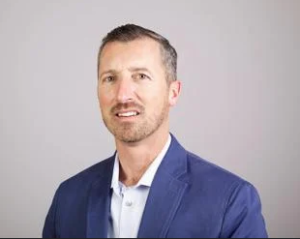 Bozeman CIty Manager, Jeff Mihelich
Impacts of Nonprofits in our Community
In this Friday Forum about The Impacts of Nonprofits in Our Community, Osher Lifelong Learning Institute at MSU Director, Bobbi Geise, introduces Richard Lyon, who moderated a discussion with Bridget Wilkinson, Executive Director of The One Valley Community Foundation, and Liz Moore, Executive Director of The MT Nonprofit Association. It was recorded via Zoom on December 10, 2021.
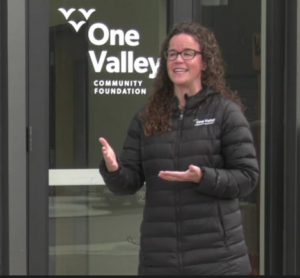 Bridget Wlkinson
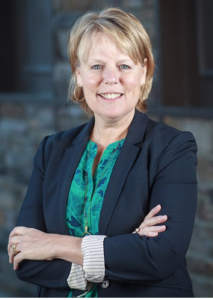 Liz Moore
You can find out more about The One Valley Community Foundation by going to their website, onevalley.org and The MT Nonprofit Association by going to mtnonprofit.org.
-
Community Issues
Human Trafficking in Gallatin County
On the evening of November 29, 2023 in MSU’s Procrastinator Theater, The HEART Initiative at MSU, MSU Women’s Center, Office of the Dean of Students, VOICE Center, The MSU Police Department, the Bozeman Police Department, Haven and the Sexual Assault Counseling Center held a panel discussion on human trafficking in our community.
The panel included Detectives Shay Stephens and Michael Mertz from the Bozeman and Montana State University Police Departments, and Sandra Schroeder of the Gallatin County Sheriff’s Department, as well as Sha, Anti-trafficking Legal Advocate with Haven, and Perrin Lundgren, Help Center Community Educator with the Sexual Assault Counseling Center.
Betsy Danforth, Director of MSU’s Women’s Center introduced the panel, which Chloe Zuraff, co-leader of the Heart Initiative, moderated.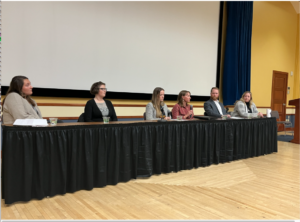
From left to right: Sha, Perrin Lundgren, Chloe Zuraff, Sandra Schroeder, Michael Mertz, and Shay Stephens.
BPL Board of Trustees Parking Lot Meeting
At 4:00 on the afternoon of November 15, 2023, the Bozeman Public Library Board of Trustees held a public meeting in the library’s newly remodeled Community Room to discuss the proposed leasing of the west side of the parking lot to the New York based developer, Left Lane.
Left Lane had proposed to lease it for $1/year for 75 years with an option to renew for another 75 years. In their presentation to the Board, they said that they would be responsible for building and maintaining a garage on the land currently occupied by 146 spaces, and they would create 270 spaces for the library, in addition to 154 spaces for their proposed large, mixed use development of a hotel, condos, restaurant and other uses.
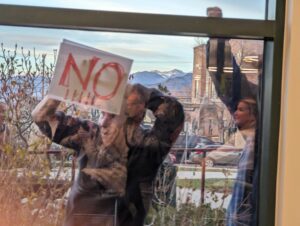
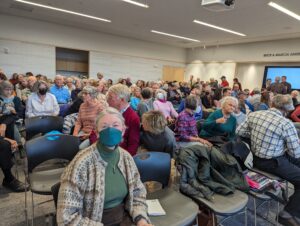
KGVM was there to record for our listeners and posterity the proceedings attended by an overflow crowd of over 200 people. There were at least 2 Bozeman City Policemen, and the crowd was so large, spilling into the hallway, where unfortunately they could not hear the proceedings, that a Fire Marshall had to control entry into the room. Many had signs against the proposal, which they held up against the interior and exterior windows.
The recording begins with Library Board Chairman, Stewart Mohr, explaining the proceedings, followed by a presentation from the Left Lane developers, Casey Tippens and Andy Bernard. This was followed by questions from the Board, primarily from member, Mike Redburn.
Then, the Board heard public comments from over 30 Gallatin Valley citizens. Those comments begin at about 24 minutes into the recording and extend to about the 1 hour and 14 minutes mark, when Board member, Pam Henley, made a motion not to proceed any further with the Left Lane proposal. After discussion by Pam Henley in support of her motion and the other Board members, including Jan Pawlak, Ken Spencer and Mike Redburn, Chairman Stewart Mohr, called for a vote on the motion, which passed unanimously to rousing applause by the audience members.
-
People and Ideas
Angella Ahn: Bridging Gaps with Music and Community
In this Provost Distinguished Lecturer Series, MSU Professor of violin, viola and chamber music, Angella Ahn, discusses her family, her studies, and how she came to make her home in Bozeman. She is active in the Montana arts community, serving on the MT Arts Council and the Intermountain Opera Board, as well as being the Artistic Director of the MT Chamber Music Society and Bravo! Big Sky Music Festival.
She was introduced by Eric Funk.
It was recorded at the Museum of the Rockies on November 15, 2022.
Indigenous Climate Justice
Dr. Kyle Whyte, a professor in the School for Environment and Sustainability at the University of Michigan, calls for action on Indigenous climate justice. This talk was presented as the 2022 Hauser Lecture at Montana State University.
-
Community Action League
Thrive
Thrive is a community-based organization established in 1986. Each year Thrive serves over 7,000 parents, children and community members through our five signature programs. Join Thrive staff members as they talk about their programs and how our community comes together to ensure everyone has the tools they need to be successful!
Gender: It’s a Thing
Representatives of the Help Center, Bridgercare, the MSU Queer Straight Alliance and Bozeman High’s Sexuality and Gender Alliance discuss what gender is, how it’s different from sex assigned at birth, where we learn about gender and how it impacts our lives on a daily basis.
-
You Are Admirable
Chris Cunningham
In this episode you will hear how Chris Cunningham began his musical career, starting from performing at talent night at Bozeman High School, to recording his first songs with John Hermanson in 1987, to getting invited to Prairie Home Companion and elsewhere. We also hear about his efforts to manage his recording and production business; about how, as a kid, he accidentally started his house on fire when his parents were away; and about his spiritual interest in crop circles. Chris also tells about his recent cancer scare and his choice to seek unconventional treatment for it.
Todd Hoberecht
In this episode, we get to chill with Todd Hoberecht. He is an actor, director, occasional inner-tuber, and used to be a pastor. Todd, or “wa-hoo” Todd, as I now know him as, is a funny, fascinating, friend to me and so many others, and I feel very blessed and charmed to have been able to interview him.
-
I Am Interchange
Compassion vs. Practicality
Over the past decade, our nation’s political landscape has become progressively polarized, with each side finding increasing comfort in standing its ground rather than finding a common one. In addition, greater pressure on natural and financial resources in light of political strife, violence, and the climate crisis is accelerating global refugees.
In this episode, we’ll take an honest look at how the divide between the head and the heart influences perspective on major social issues and policy development. We’ll explore compassionate versus practical approaches to two key issues of national debate: healthcare and immigration. And, perhaps most importantly, we’ll talk honestly about where the lines get blurry, how that gray area provides an opportunity to have conversations about divisive issues based on mutual respect and understanding.
Jack Horner – Paleontologist
Tate Chamberlin of I Am Interchange talks to Jack Horner, AKA the fossil hunter whose legendary findings inspired Jurassic Park and set my – and the world’s – imagination about dinosaurs on fire. Jack has also worked on all the Jurassic Park films to make sure the depictions of dinosaurs and the science discussed are as accurate as possible.
Jack is a globally renowned paleontologist and professor that we’re fortunate to have as a neighbor in Interchange’s home community of Bozeman, Montana. And on the topic of population control, he has a clear perspective: if we don’t want to go extinct, it’s an issue we need to think about and address right away.
As Jack examines, we don’t yet know what the carrying capacity of the earth is because we’ve extended our ability to live on this planet with agricultural technology and other inventions. But, he believes we’re getting close – and population control is our only option to continue living here without a radical transformation of the lifestyle we know and love. The science he’s studied and taken to a new level has shown that humans have been living on the planet for 3 million years…but lack the stewardship directive to ensure our existence continues. In the course of our conversation, Jack acknowledges we have the capability of causing our own extinction – but the question is: will we turn it around before the breaking point?
My Community Issue
The removal of ranger Alex Sienkiewicz and public access to Forest Service trails
Alex Sienkiewicz, a ranger of the Livingston District of the United States Forest Service, was well known for his efforts to preserve public access in the Crazy Mountains. In June, he was reassigned from his position and slated for review. Rancher, photographer, conservationist (and bon vivant) Tim Crawford calls this a travesty and links the incident to broader political changes, including recent efforts to defund maintenance of public lands. (more…)
Mary Vant Hull: Protect Downtown from Food Trucks
Mary Vant Hull cared passionately about Bozeman’s historic downtown, and believed that unregulated food trucks risk spoiling its appeal. (more…)
Voices Old and New
Why did you come? Why do you stay?
The first community conversation in the Voices Old and New series was held before a live audience at the Bozeman Public Library. The topic for this event was local sense of community, as brought out by the questions, Why did you come, why do you stay? Not surprisingly, Bozeman’s growth and the planning decisions it entails was a major subject of discussion.
Participants:
Erica Brubaker
Bruce Gourley
Jonquil Nelson
Marypat ZitzerModerator:
Steve Kirchoff
Recorded at the Bozeman Public Library on June 7, 2017.
The Manic Gardener
Landscaping for Wildlife
Doug Tallamy is not an idiot, so when he talks about a new national park that extends across the entire continent, he’s not proposing to bulldoze cities or tear up freeways. No; he’s talking about converting half the space that now goes to lawns to more productive plantings—plantings that attract insects, especially native ones. And what plants attract native insects? Native ones, of course. (more…)
Minding Your Manure
Some organic gardeners swear by manure. Others swear they’ll never touch it. To the first group, it’s the ultimate one-stop soil conditioner, complete with built-in fertilizers. To the second, conventional manure is contaminated with hormones and antibiotics, and even organic manures can contain human pathogens.
Both groups are right, and the only way to make an informed decision about whether or not to use manure is to become better informed about it. So just how wonderful a conditioner is manure? What problems can it cause? And how can they be managed or avoided? (more…)
Minding Your Manure
Landscaping for Wildlife
Doug Tallamy is not an idiot, so when he talks about a new national park that extends across the entire continent, he’s not proposing to bulldoze cities or tear up freeways. No; he’s talking about converting half the space that now goes to lawns to more productive plantings—plantings that attract insects, especially native ones. And what plants attract native insects? Native ones, of course. (more…)
Minding Your Manure
Some organic gardeners swear by manure. Others swear they’ll never touch it. To the first group, it’s the ultimate one-stop soil conditioner, complete with built-in fertilizers. To the second, conventional manure is contaminated with hormones and antibiotics, and even organic manures can contain human pathogens.
Both groups are right, and the only way to make an informed decision about whether or not to use manure is to become better informed about it. So just how wonderful a conditioner is manure? What problems can it cause? And how can they be managed or avoided? (more…)
Which way the wind blows here* · earth.nullschool.net